My Father, 2Lt Philip James Long served with 4 Squadron Royal Flying Corps in France in 1916. He was shot down on 4th December 1916 flying a Be2c (I think). He was wounded, but recovered and later flew Bristol Fighters. I would like to try and find out a bit more about him. I understand fron Air Marshal David Walker that you have some interesting records which might include my Father.
I’ve forwarded this to the Sqn, but in the meantime, can anybody help with this?
Gp Capt John ‘Jock’ Heron OBE’s autobiographical memoirs “From Schoolboy to Station Commander” has just been published by the Rolls-Royce Heritage Trust. It is on sale for £15 to members or £20 for non-members.
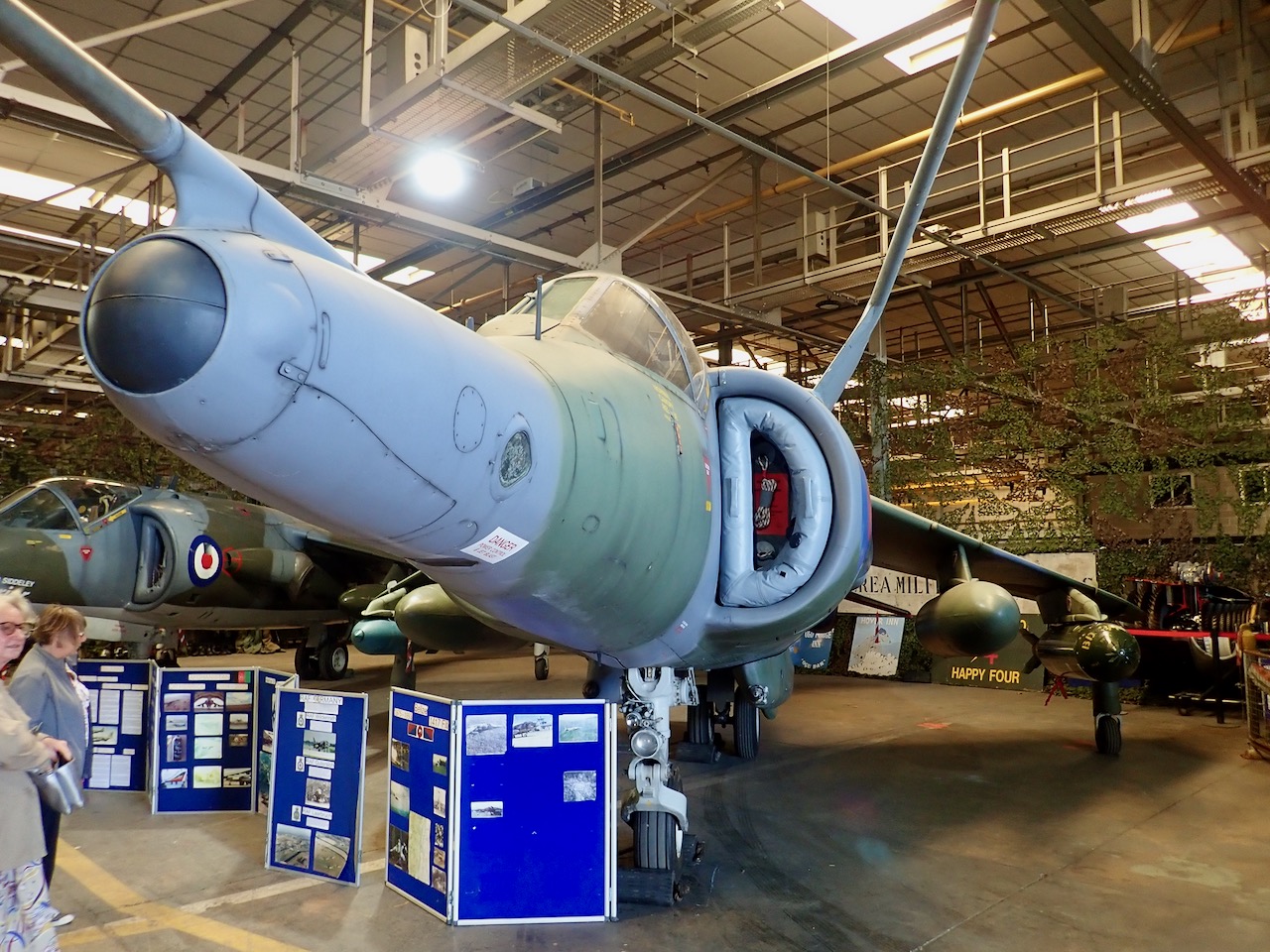
Jock served on IV at Wildenrath in the early 70s when the Sqn was flying the Harrier GR1/T2. He’s a regular at our reunions – maybe I can persuade him to sign some copies at the Centenary!
Address to purchase is: The Rolls-Royce Heritage Trust, PO Box 31, Derby, DE24 8BJ. Tel 01332 240340, email heritage.trust@rolls-royce.com
For those of you wishing to book accommodation early for the Centenary, here’s a list of hotels in the Valley area, provided by the Sqn:
Below is a list of some of the hotels near to RAF Valley. No claims about their quality but if you are looking for luxury, the best without doubt is Tre-Ysgawen Hall which is close to Llangefni and about 30mins from RAF Valley. In addition to the numerous hotels in the area there are also a lot of B&Bs. Unfortunately the Officers’ Mess will have limited accommodation due to an exercise on station. MT will be running a coach service to and from local hotels.
Hotels with a * have offered us a preferential rate.
Hotels within 30mins of RAF Valley (Closest First)
From Mick Ryan:
Jever Steam Laundry – Annual General Meeting 2012 – 17th March 2012
RAF CLUB
128 Piccadilly, London, W1J 7PY.
(100 yards E of Hyde Park Corner tube or 600 yds W of Green Park- Both Piccadilly Line – see map below).
A note on the 2012 AGM in the RAF Club on the Saturday 17th March 2012, ‘release brakes’ at 1800, or before if short of fuel.
My apologies for the delay in sending this Calling Notice. I owe you a brief explanation.
We moved house last September and soon found our pre-purchase checks were insufficiently thorough: a myriad of major problems – total rewiring, a heating system on its last leg, a kitchen of hidden horrors et al. Our current assault is on the bathroom. The only outstanding decision is whether to dispense with that seemingly French uncomfortable and indelicate attempt at personal hygiene involving greater athleticism than our ages allow: the bidet. One of our grandchildren summed up the object succinctly when he saw it ‘Look Grandad, a cat bath’.
We are not ones for naming our house but we are seriously thinking of calling it The Ranch or The Magnet or both because we have attracted the top cowboys of the five nearby counties, though we believe for the bathroom that ‘the Sheriff is now in town’, at last.
Now to business. We have moved the date forward this year. Firstly, because Mick felt, and I agree with him, that with the Diamond Jubilee and Olympics, (major national and international events), that to hold the JSL in May would be adding a third such event, hence the move to March. Second, feedback tells us that May is when many of us wish to take holidays before the summer school break, releasing screaming children into all corners of the holiday world.
For more details and reservation form please go to the JSL website.
With the Centenary later this year, it’s important that your personal details are up-to-date on fourfax. If your email address has changed, for example, I won’t be able to send you a booking form for the event. Many members email me to ask me to change their details for them, and I’m happy to do that, but there’s no reason why you can’t check and update your information yourself.
Please take a moment to check your email address is still correct on your Profile page.
To get to your Profile page you first need to log in:
In the left-hand sidebar of fourfax.co.uk, under the Twitter feed, is a text block called Meta and the first item (unless you’ve already logged in) is Log in
Click onLog in and enter your username and password
Your username is usually your first name and surname joined together
If you can’t remember your password click on Lost your password? further down and the website will send you a link where you can reset your password
If that doesn’t work, perhaps because your email has changed, email me using the Contact Form and I’ll fix it
When you’ve logged in successfully the first item under Meta will change to Site Admin. This is where you can update your personal details. Continuing on:
Click on Site Admin and you’ll be taken to a new page called Dashboard
In the left-hand sidebar click on Profile and you’ll see your Profile page with your Personal Options. Here you can change the way the site looks to you, change your password, update your bio, but most importantly, change your email address
Finally, once you’ve made the changes, scroll down to the bottom of the page and click on Update Profile to confirm the changes
In a move which is predicted to revolutionise RAF flying training, 4 (Reserve) Squadron, based at RAF Valley, is gearing up for its first student course in April 2012.
Two RAF Hawk T2 aircraft pictured during a flight over North Wales. Picture: Corporal Paul Oldfield RAF, Crown Copyright/MOD 2010
Two RAF Hawk T2 aircraft pictured during a flight over North Wales
[Picture: Corporal Paul Oldfield RAF, Crown Copyright/MOD 2010]
Through a combination of synthetic training and 28 Hawk T2 aircraft, the training syllabus which now awaits the first students is considered to be world-leading:
“I’ve been to Australia and the USA and seen how they train fast jet pilots and in my view we’ve leapfrogged them,” said Squadron Leader Rob Caine, Officer Commanding Staff Training and Standards.
“This is principally because of the Operational Capability 2 software in the jet which turns a very capable digital Hawk into a front line aircraft emulator, both air-to-air and air-to-ground.”
Students come to the North Wales station straight from flying the Tucano at RAF Linton-on-Ouse:
“On arrival each student is given a laptop and wherever they go on station they can plug it in and get whatever they need – briefings, debriefs, the flying programme, student study devices etc,” explained Flight Lieutenant Stefan Brown, an instructor on 4 (Reserve) Squadron.
During six weeks of ground school students will progress using a variety of training aids, including a full-motion simulator, and will practise everything they can expect to encounter in the air before getting airborne. Thereafter, four or five flights are undertaken with an instructor before the first solo:
“The aim of the syllabus is to produce a multi-role single jet pilot and we can take pilots faster and further than ever before,” explained Sqn Ldr Caine.
“We are now able to train the tactics and procedures of the front line here, including introductions into the classified planning aspects. As a result the standard [of graduating students] should be higher in terms of capability and readiness.”
A message from Graham James from the Harrier SIG asking for help.
I’m in the Harrier (IPMS) Special Interest Group.
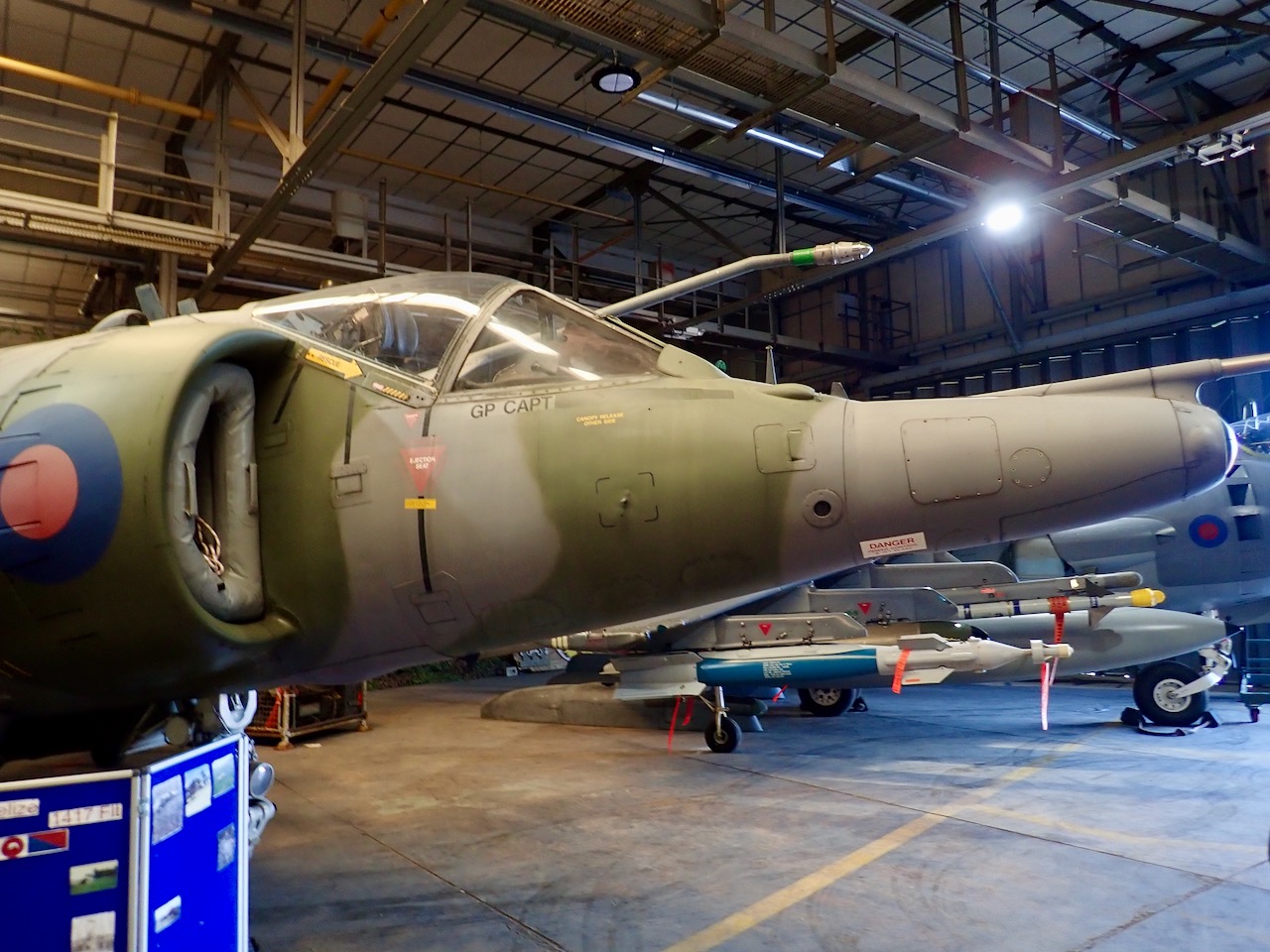
I’m trying to find out the name of the pilot on the side of this aircraft in the photo below. Apparently ZG532 is flying somewhere in Belize in 1993 (according to the caption in Andy Evans’ book). Reason for asking – I’m doing a model of this aircraft in this scheme and thought I’d be a rivet counter and get the correct name on the side. Any chance you have access to documents – or someone that has – that might say who was “allocated” this aircraft in IV(AC) at the time? I can make out “Sqdn Ldr”, but that is about all. As it was a special tail scheme, I’m hoping this is easy to determine.
The much-delayed Nimrod aircraft cost £3.4bn to develop before it was scrapped to save an estimated £1.9bn in running costs over 10 years. Photograph: Christopher Furlong/Getty Images
Britain’s 15 biggest defence projects are expected to cost £6bn more than first estimated and will be delayed by a combined total of 26 years, a parliamentary watchdog reports today.
Too often the taxpayer has had to pick up the bill for the Ministry of Defence underestimating the risks involved in procuring complex weapons systems, the Commons public accounts committee (PAC) says.
The committee identifies three large projects bedevilled by long delays and huge overspend. These include the repeatedly delayed Nimrod maritime patrol aircraft, upon which £3.4bn was spent before it was scrapped, to save an estimated £1.9bn in running costs over the next 10 years.
The MoD will incur further costs from cancelling contracts and substituting alternative capabilities. The committee has asked the National Audit Office to investigate the decision to scrap Nimrod aircraft as well as all of Britain’s Harrier jump-jets.
Consultants were paid £1.1 million to help axe Britain’s fleet of Harrier jump jets and then sell them to America, it emerged today.
The Ministry of Defence was criticised for a “ludicrous waste” of money on outside help, at a time when thousands of troops are being cut.
MPs said it was “extraordinary” that private firms were profiting from helping to slash the defence budget, arguing the job could be done by the department’s own staff. The 74 Harriers were retired eight years early as part of 2010′s defence review. But last year 72 were sold to the US military, who compared them to cars with just 15,000 miles on the clock.
The £1.1 million would pay the annual salaries of 58 entry-level soldiers. The expenditure was revealed only days after the MoD announced that 4,200 troops would be axed this year.
Shadow defence secretary Jim Murphy argued the cash could be better spent protecting jobs or equipment, adding: “People will find it extraordinary that private consultants are being paid to help slash the defence budget.
“Ministers must explain why others are profiting from decisions which have seen thousands made redundant and Britain left without an aircraft carrier with aircraft for a decade.”
Defence select committee member Madeleine Moon, who uncovered the spending through parliamentary questions, said she was “appalled” while Tory MP Patrick Mercer, a former Army officer, raised concerns about a “consultancy culture” at the MoD.
Defence equipment minister Peter Luff insisted £1 billion was being saved by removing the Harrier from service and selling the jets to the US for £110 million. The decision formed part of government efforts to plug a £38 billion black hole in the defence budget which saw tens of thousands of job losses announced and major equipment programmes cut.
The MoD said Alix Partners had been paid the £1.1 million as part of a wider contract to help deliver savings in the department. Last year it emerged the firm was being paid £3,950 a day.
An official stressed the yearly consultancy bill had fallen from £261 million to £26 million under the Coalition. A spokesman said it had been a “difficult but necessary decision” to axe Harrier. The MoD was investing in “modern, cutting-edge aircraft for the future”.
MPs have said it is “grotesque” that 40% of armed forces redundancies have been compulsory, while no civilian staff have been forced out of a job.
The Commons defence committee queried whether the terms on offer to military personnel were “fair or appropriate” given the “shocking” difference.
It also said not enough was being done to retrain, rather than sack, troops.
Defence Minister Philip Hammond said the MPs were wrong and personnel were given “every opportunity” to retrain.
Some 11,000 servicemen and 25,000 civilian Ministry of Defence (MoD) staff are being made redundant as part of government efforts to deal with the £38bn black hole in the defence budget.
But the defence committee has been told that of the 2,860 military personnel laid off last year, about two in five were made compulsorily redundant.
In contrast, the first two phases of civilian redundancies were all done on a voluntary basis.
Aeroplanes can fly because their wings cause the air pressure underneath to be greater than that above, lifting them into the air.
But engineers have for years been frustrated by a theory which wrongly explains what causes the change in pressure to occur.
The myth is commonly found in school textbooks and aeroplane flight manuals, and is so widely believed that even Einstein was rumoured to subscribe to it.
Now a Cambridge scientist has become so fed up with the bogus explanation that he has created a minute-long video to lay it to rest once and for all.
The video, published on YouTube by Prof Holger Babinsky of the university’s engineering department, seeks to explain in simple terms why the myth goes against the laws of physics.
According to conventional wisdom the pressure change happens because the air on the curved upper surface of the wing has further to travel than that below the flat underneath surface, meaning it must travel faster to arrive at the other side of the wing at the same time.
In fact the real explanation is nothing to do with the distance the air has to travel. The curvature of the wing causes the change in air pressure because it pulls some of the air upwards, which reduces pressure, and forces the rest beneath it, creating higher pressure.
A law known as the Bernoulli equation means that when pressure is lower, air moves faster – so the air stream above the wing does move more quickly than the one below, but this is not what causes the difference in pressure.
Prof Babinsky proved his theory by filming smoke passing across a wing.
If traditional wisdom had been correct the smoke above and below the wing should have reached the front edge at the same time.
The video demonstrates that the explanation is fundamentally flawed because the plume above the wing reached the edge much sooner than the plume below.
If the distance the air had to travel was causing the pressure to change, then a boat’s sail – where the air travels the same distance on the inside and outside of the curve – would not work, Prof Babinsky said.
He added: “I don’t know when the explanation first surfaced but it’s been around for decades. You find it taught in textbooks, explained on television and even described in aircraft manuals for pilots.
“There is no law in physics which states when streams of particles start at the leading edge of the wing they should reach the tailing edge at the same time.
“I’ve even heard a story that Einstein drew a design for an aircraft wing with a long, squiggly line on top of an aerofoil to make the distance for the air to travel greater, but this would not work.”
Recent Comments